The Silver-Cleaning Myth That More Polishing Means Better Care
Silver cleaning needs restraint: learn how to read the finish, choose a gentle method and stop before polishing removes detail or changes the surface.
You can clean silver without polishing it every time. Silver cleaning is gentlest when you first identify the surface, remove ordinary dirt, and polish only if tarnish remains and the finish can tolerate it. Repeated polishing may thin plating, soften sharp detail or alter a deliberately darkened surface, so care begins with deciding what the object needs.
What does the surface need?
Start with a look in bright, indirect light. Note whether the piece is uniformly dull, marked by fingerprints, spotted with food, or dark in recessed decoration. These signs call for different responses. Grease and dust are not the same as tarnish, and polishing compound is not a general-purpose cleaner.
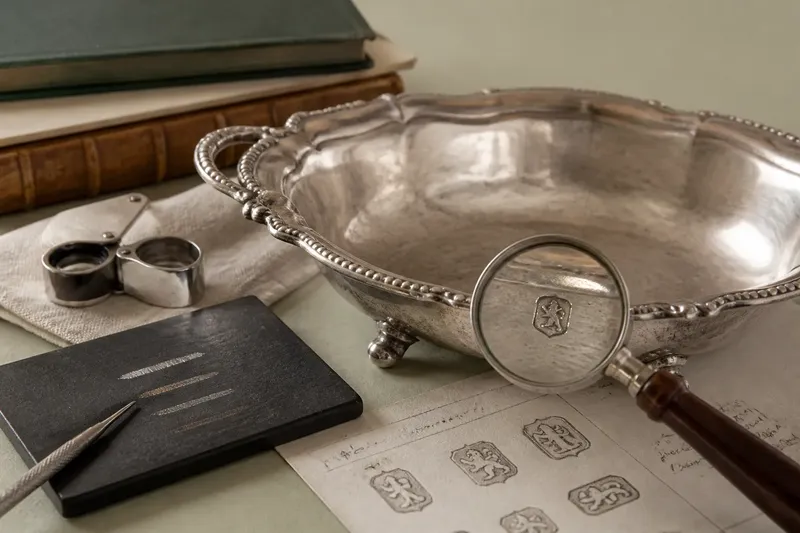
Look closely at edges, raised patterns, engraved lines and the underside. A bright surface with darker recesses may be intentional: contrast can make decoration legible. Do not assume that every dark area is neglected dirt. If you are unsure whether a finish is meant to be dark, avoid abrasive treatment and ask a reputable silversmith or conservator to assess it.
Also consider the material. Solid silver and silver plate can look alike, but plate has a thin silver layer over another metal. Polishing that layer repeatedly can expose the base metal, especially on handles, rims and raised ornament. If the object’s construction is uncertain, treat the surface as plated until you can identify it.
How should you prepare the piece?
Choose a stable work surface and lay down a clean, soft towel. This cushions the object if it slips and keeps small parts from striking a hard counter. Wash and dry your hands, or use clean cotton gloves if handling leaves fingerprints on the finish. Remove detachable pieces only when their construction makes that straightforward; do not force a stuck fitting.
Gather a soft cloth, lukewarm water, mild washing-up liquid and a clean drying cloth. If you may need to polish, choose a silver polish intended for the object’s material and finish. Avoid rough sponges, abrasive powders, toothpaste and improvised chemical mixtures: they can scratch, strip or react unpredictably with a surface.
Check any maker’s care instructions, product label and local guidance for objects with special finishes or historical value. Their directions take precedence over general advice.
Can ordinary dirt be removed without polishing?
For a washable, unadorned piece, use lukewarm water with a little mild washing-up liquid. Wet the soft cloth, wring it out, and wipe gently rather than scrubbing. Rinse away soap with clean water and dry the piece promptly with a soft cloth, paying attention to joints and crevices where moisture can linger.
Do not soak an object with hollow handles, glued components, porous inlays or loose fittings. Water can enter a join or affect a material that does not tolerate immersion. For these pieces, wipe only the accessible surface with a barely damp cloth, then dry it. If the construction or inlay is fragile, leave cleaning to a qualified professional.
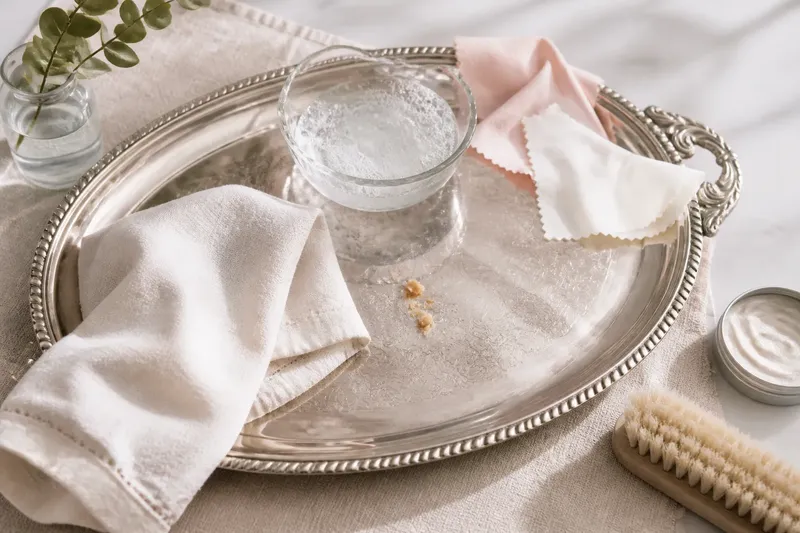
Imagine you have a silver-plated tray with fingerprints and a few crumbs but no dark tarnish. A damp, soapy cloth followed by careful drying should address the visible dirt; polishing the whole tray would add abrasion without solving a problem that requires it.
When is polishing appropriate?
Consider polishing only when tarnish remains after gentle cleaning and you want the surface brighter. First test the polish on a small, inconspicuous area, using a soft cloth and light pressure. Stop if the cloth catches, the finish changes unevenly, or the test area reveals a different colour beneath the surface. A small test cannot establish that every part of an object is safe to polish, but it can alert you to an obvious risk.
Work on a small area at a time, following the polish label. Use only enough product to do the job, and avoid vigorous rubbing over engraved lines, hallmarks, thin edges and raised decoration. On a plated piece, focus narrowly on an area that genuinely needs treatment rather than buffing every surface to the same shine.
Darkened recesses, matte finishes and intentional patina may be part of the design. Keep polish away from these areas unless you know they are unwanted and the finish permits treatment. If a piece is precious, unusually old, fragile, or important to your family, a conservator can advise whether polishing is suitable before you proceed.
What questions come up about silver cleaning?
How often should silver be polished?
There is no useful fixed schedule: polish when tarnish affects the appearance you want, not simply because a set time has passed. Between cleanings, remove ordinary residue and handle the object carefully.
Can a polishing cloth damage silver?
A cloth designed for silver may contain a polishing agent, so repeated rubbing still removes some surface material. Use it sparingly, especially on plated objects, engraved detail and areas with a deliberate finish.
Should dark detail be polished away?
Not automatically. Dark recesses can be intentional and may help define a pattern; if you cannot tell whether the contrast is original, leave it undisturbed and seek an informed opinion.
What if silver polish leaves a residue?
Follow the product directions for removing residue, using a soft cloth and gentle handling. Do not leave compound in crevices, where it can look chalky or collect dirt.
How can you keep the surface bright longer?
After use, remove food, drink and fingerprints rather than leaving them on the object. Store clean silver dry, with each piece separated by soft, suitable material so surfaces do not rub together. A silver-storage cloth or lined case can reduce contact with air and household contaminants; avoid wrapping silver in materials that may tarnish it, such as wool or rubber.
Handle serving pieces by their sturdier areas, and do not stack them where engraved faces or thin rims scrape against one another. These habits reduce the need for polishing because they limit residue and friction, not because they make silver maintenance-free.
For silver cleaning, the useful decision is not how to make every surface shine, but whether polishing will improve this particular object without erasing something worth keeping. Clean away what does not belong, preserve the finish that does, and stop when the surface is cared for rather than newly transformed.